
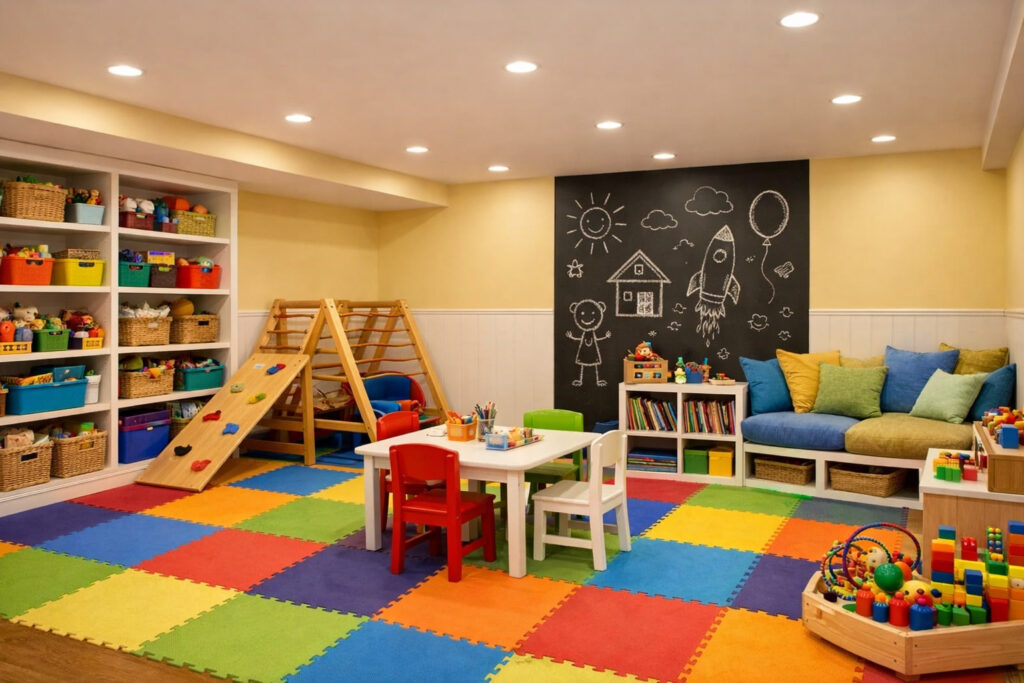

TL;DR: Turning your basement into a dedicated kids’ playroom is one of the smartest renovations a growing family can make. It reclaims wasted square footage, keeps toy clutter out of your main living areas, and gives your children a safe indoor space to play year-round — especially valuable in colder climates like Alberta.
Summary: This guide walks you through everything you need to know about transforming your basement into a kid-friendly playroom, from moisture-proofing and flooring choices to activity zones, storage solutions, and safety. Whether your basement is unfinished or just outdated, the right renovation approach can turn it into a space your whole family actually enjoys using.
A lot of families reach a point where the main floor can no longer contain the chaos of toys, crafts, Lego sets, and dress-up bins spilling into every room. The living room becomes a minefield, and the dining table doubles as an art studio. If that sounds familiar, there’s a practical solution sitting right beneath your feet. A basement development can really help a growing family reclaim their home while giving kids exactly what they need — a dedicated space to let loose, be creative, and burn off energy without disrupting the rest of the house.
Start With the Basics: Moisture, Insulation, and Lighting
Before you think about paint colors or climbing walls, you need to make sure the space is genuinely safe and comfortable for kids to spend time in.
Moisture control comes first. Basements are naturally prone to dampness, and a humid or moldy environment is the last place you want your children playing. Have a professional assess the space for moisture before anything else. Waterproofing the walls, sealing cracks in the foundation, and installing a proper drainage system if needed will protect both your renovation investment and your kids’ health.
Insulation matters more than people expect. Concrete floors and uninsulated walls make a basement feel cold and uninviting. Adding proper insulation to walls and subflooring creates a noticeably warmer space, which means your kids will actually want to be down there. In colder Canadian climates, this step isn’t optional — it’s essential.
Lighting can make or break the space. Basements don’t have the benefit of natural light flooding in from windows. Bright, warm overhead lighting combined with task lighting near reading nooks or craft tables makes the room feel cheerful rather than cave-like. Recessed pot lights and LED panels are popular choices that also keep the ceiling clean and reduce tripping hazards.
Choosing the Right Flooring for a Kids Space
This is one of the most common renovation decisions parents stress over, and for good reason. Kids fall, spill, and drag things across the floor constantly, so you need something that can take a beating while still being comfortable.
Luxury vinyl plank (LVP) has become a go-to choice for basement playrooms. It’s waterproof, scratch-resistant, soft underfoot compared to concrete, and easy to clean. It also handles the temperature fluctuations of a basement better than hardwood.
Foam tile flooring or rubber mats are excellent in dedicated active play zones where kids are climbing, tumbling, or playing on the floor. They cushion falls and provide a warm surface.
Carpet can be cozy but requires more maintenance in a space where spills are frequent. If you go with carpet, choose a low-pile commercial-grade option that’s easy to clean and won’t trap allergens.
Many families go hybrid — hard flooring for the main area and a large washable area rug or foam tiles sectioned off for the active play zone.
Planning the Layout: Zones That Grow With Your Kids
The best basement playrooms aren’t just dumping grounds for toys — they’re thoughtfully divided into zones that serve different purposes. This keeps the space organized, prevents overstimulation, and means the room continues to work as your children get older.
Active zone: This is where the energy gets released. Depending on your ceiling height, this could include a small indoor climbing structure, monkey bars, a mini rock wall, or simply open floor space for wrestling, dancing, or tumbling mats. If you’re putting in physical play equipment, always reinforce the ceiling joists beforehand and work with a contractor who understands the structural requirements.
Quiet zone: Every playroom needs a calm corner. A built-in reading nook with soft cushions and low shelving at kid-height gives children a place to decompress. This space can double as a homework station as kids get older.
Creative zone: A craft table with low storage, a chalkboard wall, and accessible art supply storage encourages creativity without the mess spreading through the house. Chalkboard paint is inexpensive and can be applied to a full wall or just a section — kids love having a giant writable surface.
Entertainment zone: A mounted TV with gaming setup or a movie corner creates a spot for movie nights and gaming sessions that keeps the noise away from bedrooms. Adding acoustic insulation to basement walls helps contain the sound.
Storage: The Secret Weapon of a Functional Playroom
No matter how great the design is, a playroom without smart storage will look like chaos within a week. The key is making storage accessible to kids at their level so they can actually put things away themselves.
Open cube shelving with labeled bins or baskets is the gold standard — kids can see where things go and grab what they need independently. Closed cabinet storage works well for puzzles, board games, and craft supplies that don’t need to be on display. Built-in cabinetry along one wall looks polished and maximizes storage without taking up floor space.
Toy rotation is another trick experienced parents swear by. Keep a portion of toys in storage and swap them out monthly. Kids engage more with fewer toys in rotation, and the room stays manageable.
Safety Details That Are Easy to Overlook
A basement renovation for kids requires a few safety-specific additions that are worth budgeting for from the start.
Install proper handrails on both sides of the basement stairs. Add a door with a latch at the top of the stairs if you have toddlers. Secure all heavy furniture and shelving to the walls to prevent tipping. Make sure all electrical outlets are covered and that lighting fixtures are out of reach. Egress windows — if your basement doesn’t already have them — are a smart addition for both safety and natural light, and are often required by building codes for finished basements.
Key Takeaways
- Address moisture and insulation before anything cosmetic. A properly waterproofed and insulated basement is the foundation of a healthy, comfortable playroom kids will actually use.
- Choose durable, kid-proof flooring. Luxury vinyl plank or rubber/foam tiles in active zones hold up to heavy use and are easy to maintain.
- Divide the space into purposeful zones. Active, quiet, creative, and entertainment zones keep the room organized and functional as your kids grow.
- Build storage in at kid height. Accessible, labeled storage systems make it realistic for kids to maintain tidiness themselves.
- Plan the lighting intentionally. Bright, layered lighting transforms a dark basement into a welcoming space kids want to spend time in.
- Don’t skip the safety details. Secure handrails, anchored furniture, covered outlets, and proper egress are non-negotiables in a basement kids’ space.
- Think long-term. A well-designed basement playroom can evolve from a toddler play space into a teen hangout, making it one of the best investments a growing family can make in their home.
Frequently Asked Questions
How much does it typically cost to renovate a basement into a kids’ playroom?
The cost varies significantly based on whether your basement is already finished or completely unfinished, your local labor rates, and how detailed the renovation is. For an unfinished basement, you’re looking at structural work like framing, drywall, flooring, insulation, and electrical — which can range from $25,000 to $60,000+ depending on square footage and finishes. If the basement is already finished and just needs updating — new flooring, paint, lighting, and built-in storage — costs can be significantly lower. Getting quotes from local renovation contractors gives you the most accurate picture for your specific space and goals.
What’s the best flooring for a basement kids’ playroom?
Luxury vinyl plank (LVP) is widely considered the best all-around choice for basement playrooms. It’s waterproof, warmer underfoot than concrete, durable enough to handle heavy foot traffic and toy dragging, and comes in styles that look great. For dedicated active zones, rubber or foam interlocking tiles provide extra cushioning. If you prefer carpet, choose a low-pile, stain-resistant option. Avoid hardwood in basements due to moisture sensitivity.
How do I keep a basement playroom from feeling dark and gloomy?
Lighting is the single biggest factor. A combination of bright recessed overhead lighting and task lamps near activity areas makes a huge difference. Painting walls a light, warm color (whites, soft yellows, light grays) reflects light and makes the space feel larger. If your budget allows, adding or enlarging egress windows brings in natural light. Wall murals, colorful storage bins, and vibrant rugs also inject energy into a space without relying on sunlight.